Phase 1 POC · August–September 2026 · Gujarat, India

AI-Enabled Breath
TB Screening
at the Lowest Level of Care

A handheld, point-of-care breath analyzer using 4× Nanoz MEMS metal-oxide arrays, CO₂-gated alveolar sampling, and on-device AI — delivering 1-minute symptom-agnostic active TB case finding by ASHA community health workers at < USD 1 per test.

27%
of global TB burden in India
1.0M
missed cases per year
25,000
POC participants in 8 weeks
<1 min
non-sputum breath test
Peer-reviewed Sensor platform clinically validated — 100 % healthy/disease separation, PCA 95.41 % · IEEE Sensors Journal 2023 See the evidence →
The Mission

Inverting the
Diagnostic Pyramid

Today, TB diagnosis depends on patients self-presenting with symptoms and producing sputum — excluding women, children, and rural populations. We replace symptom-based triage with proactive, instrument-based screening at the community level.

Today's broken pipeline

Sputum-based confirmation only

  • Patient must self-present with symptoms
  • Sputum collection required (often impossible)
  • GeneXpert: USD 9.98 / test, lab-bound
  • 1.0M cases missed annually in India
  • Excludes women, children, rural populations
The Milkyway2026 model

Symptom-agnostic active case finding

  • Proactive screening of entire communities
  • 1-minute exhaled-breath sample
  • < USD 1 per test, no specimen handling
  • Operable by ASHA community health workers
  • 80–90 % triage filter → focused GeneXpert use
ASHA Operability

Built for the lowest level of care

Designed to be operated by ASHA community health workers without medical training — no lab, no sputum, no specimen logistics.

≤ 30 min
ASHA training

Lay-worker level · 18-hour curriculum covering 50 trainees before POC start.

Zero
Specimen handling

No sputum · no biohazard waste · no cold-chain · no transport · no storage.

1 button
Single-button operation

Traffic-light output (green/yellow/red) + quantitative TB probability · Bluetooth 5.0 to tablet.

Technology Stack

Multi-Modal Sensor Fusion

12 sensing zones · 8 heater profiles per breath · ~1 164 features per patient · on-device XGBoost inference in < 100 ms.

🧬

VOC Sensing

4× Nanoz NZGS-2 MEMS metal-oxide arrays. 12 sensing zones, 8 heater profiles per breath. LoD ≥ 25 ppb acetone.

💨

Capnography

Sprint IR-R NDIR CO₂ sensor with sub-1-second alveolar phase gating. Only Phase-III breath data is analysed.

🌬️

Spirometry

TSR proprietary ThermoAir 5.0 (TA5) thermal mass-flow sensor — 0.5 % accuracy (L/min · m/s). Cleanroom-calibrated ISO 14644 Class 5–6 · 24-bit high-end PCB.

🤖

On-Device AI

XGBoost ensemble < 1 MB INT8. Federated learning across deployment sites. < 100 ms inference on STM32U5.

Sensitivity
≥ 92%
vs. WHO TPP minimum 90 %
Specificity
≥ 80%
vs. WHO TPP minimum 70 %
AUC
≥ 0.95
on the largest breath-VOC + GeneXpert paired dataset
On-Board Diagnostic Modalities

Six independent measurement channels
in one handheld device

The Nanoz BA Series is not a "VOC sensor with extras" — it integrates six clinically-distinct measurement modalities, each capturing orthogonal patient information. The AI fusion engine uses the full 1 164-feature space to anchor disease classification.

Modality 1
Spirometry
Airflow & volume profile

TSR proprietary ThermoAir 5.0 (TA5) volumetric-flow sensor — thermal mass-flow measurement inside the heated sample path (no Pitot tube, no differential pressure). Captures airflow and velocity in real time across the whole breath cycle, same clinical target as a spirometer. Calibrated in TSR’s in-house cleanroom (ISO 14644 Class 5–6); read out via a proprietary 24-bit high-end PCB (vs. Nanoz standard 4–8 bit) for maximum signal resolution. The whole device is protected by the Milkyway2026 patent CH 000590/2026, privately held by Michael Scheller — the base technology behind all three projects.

Accuracy (volumetric flow)0.5 % (L/min)
Accuracy (velocity)0.5 % (m/s)
Measurement principleThermal mass-flow (TSR proprietary)
Sample rate1 kHz (1 000 samples per second)
Derived parametersFEV₁ · FVC · PEF · FEV₁/FVC ratio · breath volume
Clinical useCOPD severity (GOLD) · asthma · restrictive disease
Readout front-endHigh-end 24-bit PCB (vs. Nanoz standard 4–8 bit)
Calibration environmentTSR in-house cleanroom · ISO 14644 Class 5–6 · traceable to ISO/IEC 17025:2018
ThermoAir 5.0 (TA5)0.5 % · 1 kHzFEV₁ · FVCCleanroom ISO 14644 Class 5–624-bit PCBCH-Patent 000590/2026
Modality 2
Capnography
CO₂ phase profile

Sprint IR-R solid-state NDIR sensor — sub-1-second response enables real-time identification of the alveolar Phase-III plateau (CO₂ ≈ 4 %). VOC data is harvested only from the alveolar window, eliminating dead-space and transition-phase contamination.

Response time T₁‰₀< 1 s (10× faster than typical NDIR)
Range0–5 % CO₂ (option 0–20 %)
Sample rate20 Hz
Derived parametersetCO₂ · capnogram waveform · α-angle · β-angle
Clinical useAlveolar gating · COPD/asthma airway obstruction · pulmonary perfusion
Pre-chamber1 cm Aerogel block + Al cooling fins · 38 °C target
NDIR Sprint IR-RPhase-III gatingetCO₂
Modality 3
VOC Sensing
16-zone metal-oxide array

4× Nanoz NZGS-2 MEMS metal-oxide chips (4 sensing zones each = 16 zones total) operated through 8 sequential heater-voltage profiles per breath. Each (zone × heater) combination generates a temporal response — yielding ~ 1 164 distinct features per patient.

Sensing zones16 (4 chips × 4 zones)
Heater profiles8 sequential temperatures per breath cycle
Acetone LoD25 ppb (Diabetes T2 marker, threshold 900 ppb)
NH₃ response5× baseline @ 50 ppm (CKD marker, threshold 1 ppm)
Ethanol / Formaldehyde LoD30 ppb each (liver / lung-cancer markers)
SelectivityPeer-validated PCA-discrimination CO/NO₂/O₃ on single WO₃ zone (Im2NP/CNRS)
4× Nanoz NZGS-216 zones8 heater profilesIm2NP-validated
Modality 4
Environmental Compensation
T · RH · ambient drift

Sensirion T/RH integrated sensor — provides absolute temperature and humidity context for every breath. Critical for tropical-climate operation (Indian POC: 15–45 °C / 0–95 % RH). Without active compensation, MOx sensor drift would dominate the VOC signal.

T accuracy± 0.2 °C
RH accuracy± 1.5 %
Operating range−40 °C to +125 °C, 0–100 % RH non-condensing
Compensation algorithmMultivariate AI correction across all 16 MOx zones
Validated tropical envelope15–45 °C / 0–95 % RH (Gujarat, May/June)
External Nanoz referenceCompanion drift-anchor channel (auto-drift stack tier 1)
Sensirion SHTDrift compensationTropical-validated
Modality 5
On-Device AI Inference
Real-time disease probability

POC phase (current): all breath data is uploaded encrypted to the TSR Cloud (Switzerland) — that is where the AI learns from every single patient and improves continuously. This is the prerequisite for the performance jumps from N = 25 000 → 500 000 → 5 M patients.

Commercial roll-out (post-CDSCO): the device runs autonomously with its own on-device AI (XGBoost ensemble < 1 MB INT8 on STM32U5 Cortex-M33, < 100 ms inference per breath). When internet is available it automatically receives new models from the cloud and pushes aggregated, anonymised learning data back. The device stays diagnostic-capable offline, but benefits from the growing data lake whenever it is online.

POC phaseEncrypted cloud upload (TSR Cloud Switzerland) for model training
Commercial phaseAutonomous on-device AI · optional cloud sync for updates & data return flow
Model size (on-device)< 1 MB INT8 quantised
Inference time< 100 ms per breath
HardwareSTM32U5 Cortex-M33 with TrustZone
OutputTraffic-light (green/yellow/red) + quantitative disease probabilities
Data protectionDPDPA 2023 · Swiss FADP · GDPR · end-to-end encryption · pseudonymisation
ConnectivityBLE 5.0 to tablet · USB-C · Wi-Fi / 4G for cloud sync · ABDM Health ID compatible
Cloud learning (POC)Autonomous in commercialCloud sync built-inDPDPA/GDPRTrustZone
Modality 6
Pre-Event Detection
Early-warning signature analysis

The combined VOC + capno + spirometry + environmental feature space is monitored for pre-clinical pattern signatures — Dr. Anil Nakum's clinical observation indicates that biomarker drift becomes detectable in breath 10–20 days before symptomatic onset. The AI's longitudinal-tracking head flags this trajectory before a patient becomes symptomatic.

Detection horizon10–20 days pre-symptomatic (TB · COPD exacerbation)
MechanismLongitudinal AI delta-tracking on patient's own baseline
Output"Watch" status — yellow flag for re-screening before clinical event
Patient adherenceRepeat screening at PHC interval — leverages Make-in-India low cost
Clinical useActive case finding · COPD exacerbation early intervention · CHF decompensation
Pre-clinical horizonLongitudinal AIActive case finding
6
independent on-board modalities
~ 1 164
features per patient · v3.5
100×
SNR vs. market standard
< 100 ms
on-device inference
Phase 1 POC

25 000 Patients · 8 Weeks · 4 Hospitals

Two-shift operation with 8 devices in parallel, GeneXpert MTB/RIF as gold-standard reference, ICMR & Government of Gujarat coordinated.

Aug 2026
Site initiation
4 IEC approvals · ASHA training (50 trainees, 18 h) · device validation · data infrastructure live
Go: 4 IECs approved
Aug–Sep 2026
POC enrollment (8 weeks)
25 000 patients across 4 Gujarat hospitals · GeneXpert reference for all · daily monitoring
Go: ≥ 20 000 evaluable
Oct 2026
ML finalization
XGBoost ensemble locked · federated learning deployed · sens/spec/AUC confirmed
Go: 92/80/0.95
Nov 2026 – Jan 2027
Analysis · publications · ICMR prep
2 peer-reviewed publications · open dataset release · ICMR trial protocol filed
Go: ICMR accepted
Q1 2027 → Sep 2027
ICMR-coordinated multi-site trial
Government-supported scale-up · CDSCO Class A → B/C update for TB-specific indication
Go: ≥ 5 sites active
Risks & Mitigations

What can go wrong — and how we mitigate it

VOC drift in tropical conditions External Nanoz reference channel + AI drift correction. Residual < 0.04 %/week validated on the Nanoz MEMS-MOX sensor platform.
Enrollment delays Two-shift operation across 4 sites. 2 backup sites identified through Dr. Nakum's 10+ Gujarat hospital network. ASHA pre-screening pipeline.
IEC approval timeline Pre-submission consultations completed; full dossiers prepared; submissions Q3 2026.
Regulatory class transition Device already CDSCO Class A registered (pulmonary respiratory screening device). TB-specific Class B/C update follows POC + ICMR data — no greenfield submission needed.
Inter-site variability Federated learning preserves site-level patterns. Centralised monthly calibration protocol.
Hardware Roadmap

From VOC Sensing to Quantum Diagnostics

Vertical integration: in-house diamond growth → quantum sensors → breath diagnostics — across Switzerland and India.

Multi-indication roadmap

One platform, many diseases

The same hardware (4× Nanoz NZGS-2, CO₂ gating, ThermoAir 5.0, T/RH) captures multi-modal physiological data. The dataset grows with each phase — and so does the number of classifiable indications.

Phase 1 (POC 2026) → Phase 2 (ICMR follow-on from Q1 2027) → Phase 3 (mass screening from 2027/28)
Phase 1 · POC 2026 (8 indications)
Tuberculosis
Type-2 Diabetes
CKD
COPD
Asthma
Liver cirrhosis
Lung cancer
Oral cancer / OSMF
Phase 2 · ICMR follow-on from Q1 2027 (+8 indications)
Cardiovascular risk
Heart failure
COVID-19 & resp. viruses
H. pylori
Sepsis early-warning
Cystic fibrosis
IBD
Mesothelioma (MPM)
Phase 3 · Mass screening & pipeline (8+ in preparation)
Sleep apnoea (OSA)
NASH / fatty liver
Pneumonia
Bronchiectasis
Acute kidney injury
DKA (ketoacidosis)
Alzheimer (early)
Parkinson (early)
And what’s next? All 49 indications
AUC trajectory, ROC curves & confounder robustness per disease — interactive in the Disease Universe.
Disease Universe →
What the POC unlocks

From 25 000-patient POC to global platform

Data Flywheel

Every patient makes the AI better

Every encrypted breath uploaded to the TSR Cloud improves the model — and therefore the performance for future patients. Diagnostic accuracy is therefore not a fixed number, but a function of dataset size.

Phase 1 · POC 2026
N = 25 000
Patients · 4 sites · 8 weeks
Expected AUC ≥ 0.95
Sens ≥ 92 % · Spec ≥ 80 %
Phase 2 · ICMR from Q1 2027
N = 500 000
Multi-site ICMR study
Expected AUC ~ 0.96–0.98
+ 8 more indications
Phase 3 · Mass-screening 2028+
N = 5 000 000+
NHM/NTEP roll-out India
Competitor-free dataset
continuous model updates
Platform breadth

49 indications, one breath-gas platform

Explore the full Disease Universe — AUC trajectory across the data flywheel, ROC curves and confounder robustness for every indication.

Disease Universe →
Expected Health Impact

Estimated 205 000–457 000 lives saved per year in India

Conservative model based on NTEP population reach & diagnostic-pyramid inversion. Scales with CDSCO fast-track approval (Q1 2028 / Q2 2028) and NHM integration.

Indication Detected per year Impact
Tuberculosis200 000–500 000 cases→ 30 000–60 000 lives
Type-2 Diabetes5–10 M early-detected→ 100 000–250 000 CV deaths avoided
CKD (chronic kidney disease)10–20 M early-detected→ 50 000–100 000 ESRD delayed
Oral cancer (Stage I)30 000–50 000 Stage-I shifts→ 5-yr survival < 30 % to > 70 %
TOTAL INDIA 205 000–457 000 lives per year

Conservative estimate — Phase 4 (global) adds an additional 2–5 M lives/year from 2030 onward.

NTEP-priority sub-cohorts

Where the current NTEP pathway has gaps

Three patient groups poorly served by the existing sputum pathway — the BIRAC SPARSH follow-on grant (Q3 2026) focuses specifically on these.

Paediatric TB
Children cannot produce sputum — a breath test is the only practical community-level screening route.
MDR/XDR-resistant strains
VOC pattern differentiation flags resistant strains earlier than the long GeneXpert-MTB/RIF pipeline.
Tribal-equity cohort
Gujarat tribal districts (Dahod, Narmada, Tapi etc.) — roll-out via mobile ASHA teams without clinical infrastructure.
Phase 4 · from 2028

Global-health roll-out · Sub-Sahara & LMIC

After validated Indian mass-screening from 2028, the international roll-out begins — starting with the 5 highest-TB-burden Sub-Sahara countries, each anchored to a WHO/FIND partner.

South Africa
Nigeria
Kenya
Ethiopia
DR Congo
Partner anchor:WHO Stop-TB Partnership
Clinical validation:FIND Foundation
Total addressable:25 LMICs · 4 B population
Validation & Simulation

From simulation to live cohort

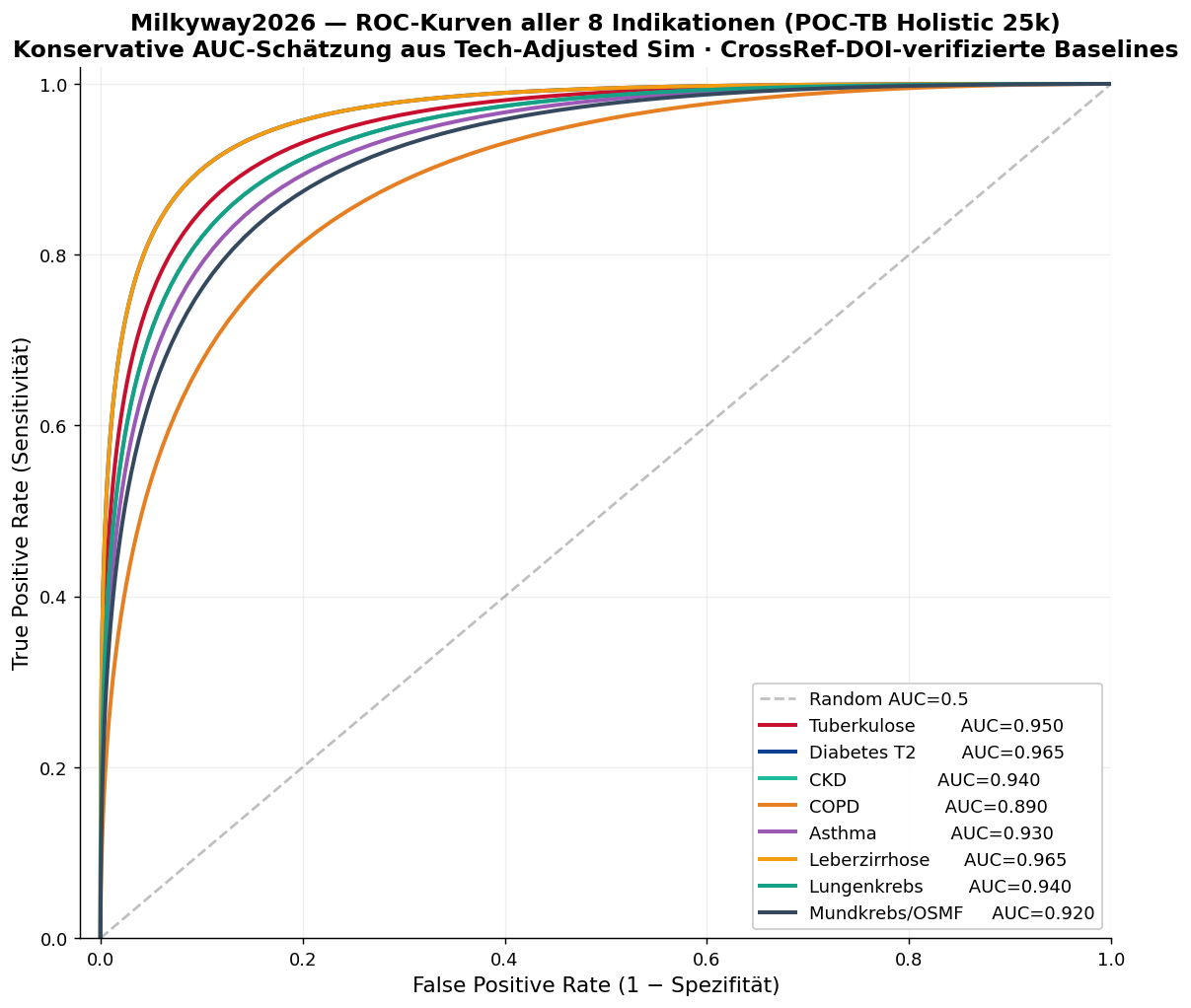
Tech-adjusted simulation across 12 800 patients, PCA on 16 MOx zones, 8-class disease separation and ROC across 8 indications — the analytical groundwork before the 25 000-patient POC.

ROC across 8 indications
Headline Plot

ROC across 8 indications

Conservative AUC-estimate from tech-adjusted simulation, with cross-referenced peer-reviewed baselines for each indication.

TuberculosisAUC = 0.950
Diabetes Type 2AUC = 0.965
CKDAUC = 0.940
Liver cirrhosisAUC = 0.965
Lung cancerAUC = 0.940
AsthmaAUC = 0.930
Oral cancer / OSMFAUC = 0.920
COPDAUC = 0.890
click to enlarge →
Gas Detection Track Record

Six clinically-relevant gases
already characterised

Documented limits of detection & selectivity for the breath-relevant gases of the Milkyway BA Series — based on Nanoz datasheet, Im2NP / CNRS Marseille (ALLSENSORS 2020), and IUPUI breath-VOC studies.

Acetone
25 ppb
Indication
Type-2 Diabetes (> 900 ppb in disease vs < 500 ppb healthy)
Source: Nanoz NZGS-2 datasheet rev. 3.3.0 · IUPUI / Prof. M. Agarwal IEEE Sensors
NH₃
~ 1 ppm
Indication
CKD (chronic kidney disease) — > 1 ppm threshold
Source: Nanoz NH₃ characterisation reports · response I₁₁₁›/Iᵦ ≈ 5× at 50 ppm
Ethanol
30 ppb
Cross-modal
Liver cirrhosis · multi-disease confound control
Source: Nanoz NZGS-2 datasheet · ADS1115 16-bit @ V_FS 4.096 V
Formaldehyde
30 ppb
Indication
Lung cancer · oral cancer / OSMF
Source: Nanoz NZGS-2 datasheet · ΔR/R₀ 1.0–3.0 % @ 100 ppb
CO & NO₂
PCA-Sep
Selectivity
CO 2–16 ppm · NO₂ 200–800 ppb — fully discriminated by temperature-modulated PCA
Source: Im2NP / CNRS Marseille · ALLSENSORS 2020 (Prof. K. Aguir's group)
O₃
80 ppb
Confound
Ambient ozone interference — characterised, separable from breath signal
Source: Im2NP / CNRS · 80–160 ppb tested · 1 single WO₃ zone discriminated

All gases shown are atmospheric- & breath-relevant. Industrial / automotive gas-detection campaigns (battery thermal-runaway, EV in-cabin VOC monitoring with Stellantis & Renault) demonstrate sensor-platform reliability in harsh real-world conditions but are not part of the clinical use case.

Predicate & Commercial Validation

The Nanoz sensor platform is
already deployed

We are not betting on an unproven sensor. The same Nanoz NZGS-2 architecture used in the Milkyway BA Series is already in three independent commercial & regulatory tracks — medical (USA FDA), industrial (EV automotive), and academic (peer-reviewed clinical research).

FDA-Track Medical Predicate · USA

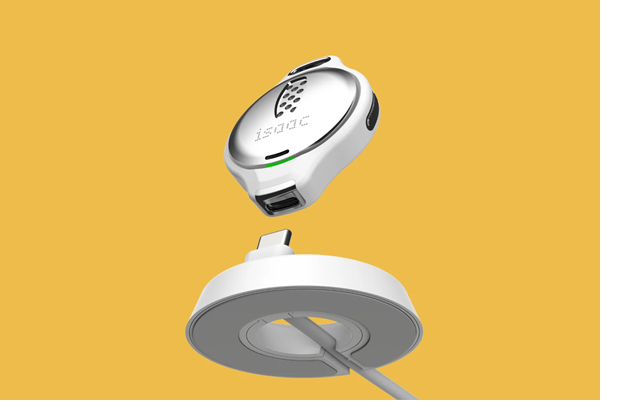
Scosche Prevnt

Pre-diabetes breath-detection device, currently in U.S. FDA pathway with peer-reviewed publications. Uses the Nanoz sensor platform — the same MEMS-MOx architecture as the Milkyway BA Series.
Scosche Prevnt — Isaac breath detector
Peer-reviewed IEEE Sensors Journal · 2023

Peer-reviewed scientific evidence

The clinical evidence for the Nanoz sensor platform is published and independently peer-reviewedMaciel, Sankari, Woollam & Agarwal, IEEE Sensors Journal 2023. Measured on 1× Nanoz NZGS-2 at VH 2.0 V / VS 0.8 V.

95.41 %
PCA variance (PC1)
100 %
Healthy vs. disease separation
24 L
Breath volume
Nanoz NZGS-2 chip
DOI: 10.1109/JSEN.2023.3288968
Why this matters for Milkyway BA
  • FDA-validated sensor platform. Scosche Prevnt establishes that Nanoz MEMS-MOx hardware is acceptable for U.S. FDA medical-device review — de-risking the future Milkyway BA US-market path.
  • Single-disease focus. Scosche Prevnt targets one indication (pre-diabetes / hypoglycaemia) using one Nanoz chip. Milkyway BA scales to eight indications using four Nanoz chips × four sensing zones × eight heater profiles — a 30–60× richer feature space.
  • Confidence anchor for investors and regulators. Pharma addressees and Indian regulators (CDSCO) recognise an FDA-track predicate as the highest-credibility external validation of sensor technology.
How Milkyway2026 strengthens the Scosche Prevnt evidence base

Stated explicitly in our 28 April 2026 Gates Foundation Grand Challenges submission: TSR's 25 000-patient Phase-1 POC dataset will become a multi-disease validation reservoir for the entire Nanoz-sensor scientific community — directly supporting the Scosche Prevnt FDA-track programme.

  • Anonymised 25 000-patient breath-VOC data shared with the broader Nanoz academic ecosystem (IUPUI, Im2NP/CNRS, Aix-Marseille).
  • Diabetes/pre-diabetes is one of the 8 Milkyway2026 indications — direct cross-validation of the Scosche Prevnt acetone-pathway hypothesis at 200× the n of the 2023 IUPUI study.
  • Multi-modal feature fusion (capnography, spirometry, T/RH compensation) gives the Prevnt programme a route to higher AUC if Scosche elects to license/co-develop on Milkyway hardware.
  • Co-authorship offer on the resulting Lancet / IEEE Sensors publications extended to the Maciel/Agarwal IUPUI group.
🚗
Industrial · Automotive

Stellantis & Renault

Commercial Nanoz deployment for EV battery thermal-runaway early-warning and in-cabin VOC air-quality monitoring.

Proves: harsh-thermal · vibration · long-term reliability
🎓
Academic · Clinical Research

IUPUI · Prof. M. Agarwal

Six disease conditions validated on identical Nanoz architecture: hypoglycaemia, prostate cancer, breast cancer, cystic fibrosis, COVID-19, diabetes.

Proves: cross-disease applicability · 100 % PCA-separation
🔬
Sensor-Physics · Co-Inventor

Im2NP / CNRS Marseille

Prof. Khalifa Aguir — co-inventor of NZGS-2 architecture (US20160238548A1), 200+ MEMS-MOx publications, GADC Co-Investigator.

Proves: 15+ years multi-target gas-discrimination foundation

Scosche Prevnt is a registered product / programme operated by Scosche Industries (USA). Its mention here is for predicate-device context only. Milkyway2026 is an independent device line, not affiliated with Scosche Industries.

Market Positioning

Where Milkyway BA fits in

Comparison against established TB diagnostic methods and the two most relevant VOC competitors.

Method TB Sens Multi-modal POC? $/test $/device
Sputum microscopy50–60 %Lab$2–5
GeneXpert MTB/RIF85–89 %Semi$10–15$17 000
Truenat MTB Plus80–85 %Semi$8–10$8 000
Owlstone FAIMS80–85 %VOC only~$250~$35 000
Aeonose eNose76–84 %VOC only~$30~$8 000
ResApp cough audio79–86 %audio only~$5app
Milkyway BA (target) 88–95 % ✓ YES ✓ YES $0.85 $800–2 000

Competitor sensitivities: peer-reviewed literature 2018–2024 · Milkyway BA target derived from v3.5 spec + 1 164-feature multi-modal fusion.

De-risking by design

Government Engagement

Stakeholder alignment completed at federal, state, and ICMR level prior to submission. Letters of Support are being formalized.

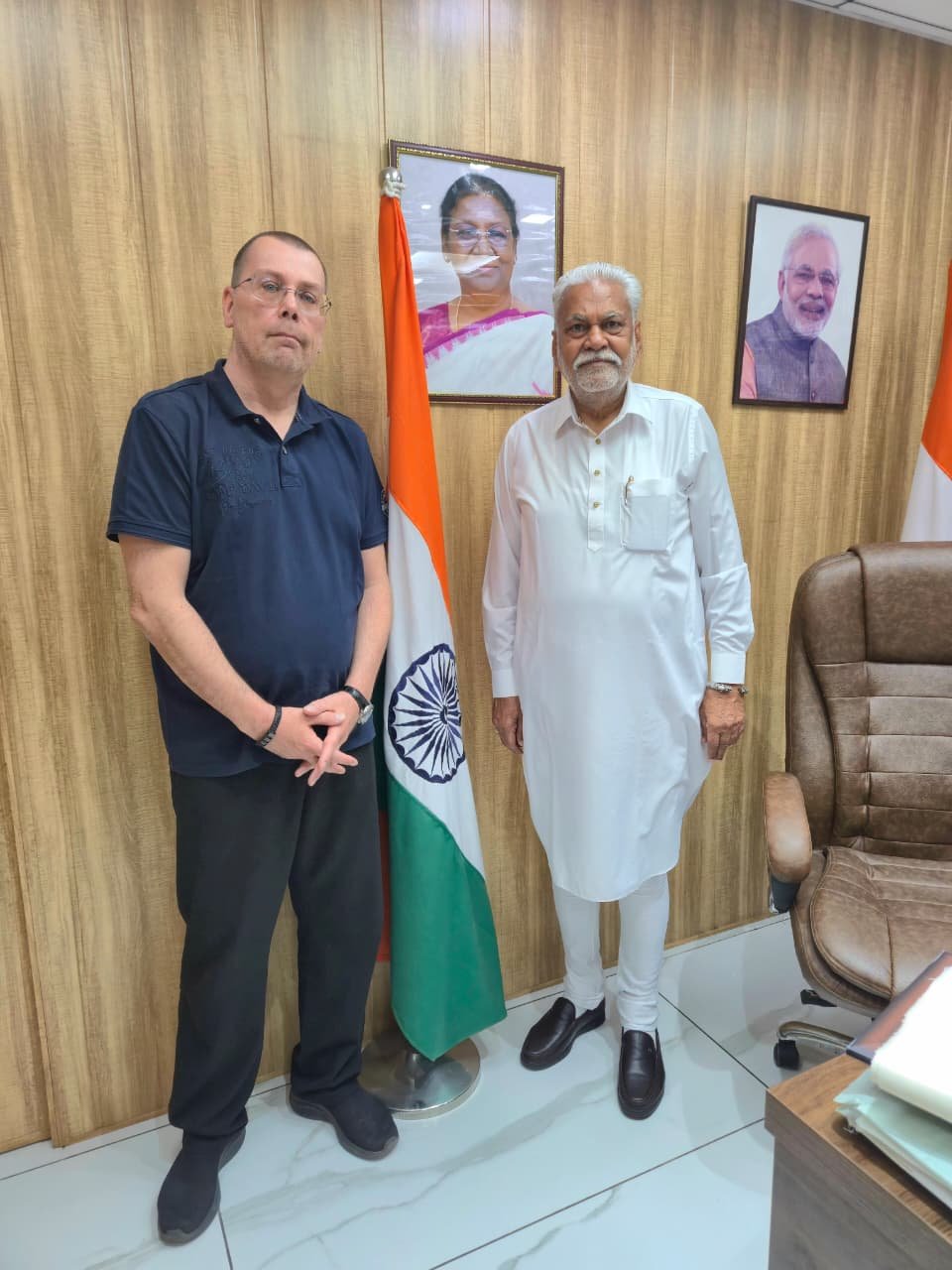
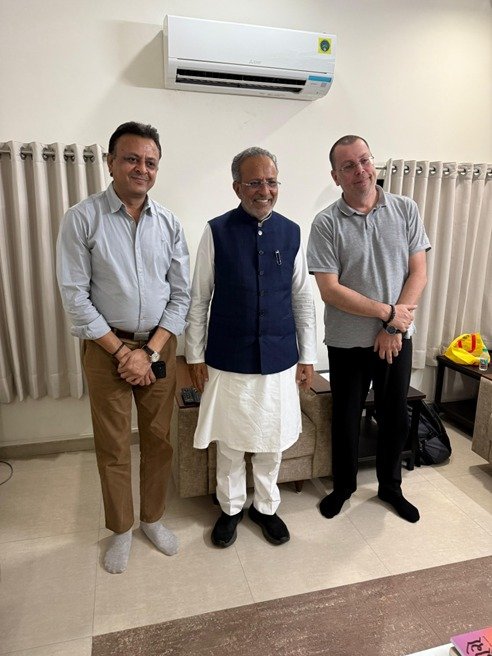
Meeting with Hon. Shri P.P. Rupala, 17 April 2026
17 APRIL 2026 · NEW DELHI
Federal Political Anchor

Hon. Shri P.P. Rupala

Member of Parliament (Rajya Sabha) and former Union Minister of Fisheries, Animal Husbandry & Dairying (2019–2024). Senior BJP leader anchoring federal political support for the GADC consortium and CDSCO Class B/C indication update.

Cabinet-tier endorsement CDSCO acceleration ICMR pathway
Gujarat State Health Minister meeting
MAR & APR 2026 · 2 MEETINGS
State Health Authority

Gujarat State Health Minister

Site-approval for 4 Gujarat hospitals · IEC-process acceleration · clinical-operations endorsement.

Gujarat State Research Minister meeting
MAR & APR 2026 · 2 MEETINGS
State Research Authority

Gujarat State Research Minister

Make-in-India alignment · DVA ≥ 40 % confirmation · PLI-scheme eligibility for TSR Surat assembly.

📷
Photo to follow
Coming soon
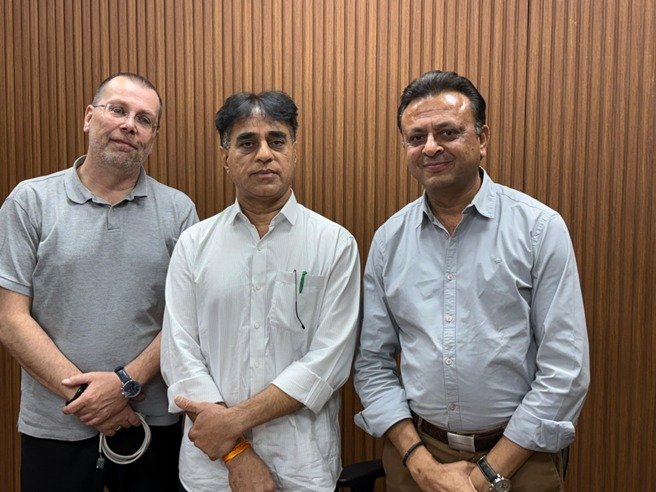
18 APR 2026
ICMR Coordination

Dr. Taruna Madan Gupta

Indian Council of Medical Research · trial-coordination commitment for ICMR-led multi-site phase from Q1 2027.

📋
PRE-SUBMISSION COMPLETE
Regulatory

CDSCO & IECs

CDSCO Class A registration completed for the Nanoz BA Series · four parallel IEC submissions targeted Q3 2026 · TB-specific Class B/C update planned post-POC.

🎯
✓ SUBMITTED · 28 APR 2026
Bill & Melinda Gates Foundation

Grand Challenges Submission

Submitted to "Innovations in Cost-Disruptive Tools for Diagnosis & Screening" — Application 0000001744 · 28 April 2026, 05:00 AM PDT.

USD 1.11 M requested · anchors an EUR 9–19 M financing stack

Photo credits: TSR Group internal records · April 2026 · click any photo to view full size

Team

Engineering, Sensor Physics,
Clinical Domain

MS
PRINCIPAL INVESTIGATOR

Michael Scheller

CEO of TSR Messtechnik AG (Schaffhausen); Director and Co-Owner of TSRAI NANOZ Sensors Pvt. Ltd. (Surat). Private owner and inventor of the Milkyway2026 patent (CH 000590/2026) — the base technology of all three projects (Milkyway Breath Analyzer, SURAT-7B NV diamonds, Blue Elephant). Technical project lead, sensor-stack integration, cross-site coordination CH/IN/FR.

KA
CO-INVESTIGATOR

Prof. Khalifa Aguir

Professor Emeritus, Aix-Marseille Université, IM2NP-CNRS UMR 7334. Inventor of the Nanoz NZGS-2 sensor architecture (US20160238548A1). Nanoz S.A.S. shareholder; 200+ publications in MEMS-MOx microsensors.

AN
CO-INVESTIGATOR

Dr. Anil Nakum

R&D Director, Planterum Bioscience (Porbandar, Gujarat). 17+ years biotech leadership. 9 Indian patents covering HIV/AIDS, viral pathology, autoimmune & inflammatory disorders. 10 trademarks; pilot manufacturing facility.

AM
R&D MANAGER

Dr. Arbi Maalaoui

Ph.D. Materials Science. TSRAI NANOZ Sensors Pvt. Ltd. Sensor-layer development, MEMS device characterization, ISO/IEC 17025 quality assurance.

MN
DATA SCIENTIST

Dr. Matthieu Nugue

Ph.D. TSRAI NANOZ Sensors Pvt. Ltd. Edge-AI and multi-modal classifier development; on-device inference pipelines.

CM
FIRMWARE LEAD

Christian Meister

Lecturer in CS, EE & Medical Technology, Hochschule München (HM). Device firmware, embedded software, IEC 60601 conformity engineering.

Institutional Quality · Manufacturing Partner

ISO 9001:2015 · ISO/IEC 17025:2018

The device is manufactured by TSR Messtechnik AG, which operates a certified Quality Management System and an accredited Calibration & Testing Laboratory across its Swiss and Indian entities. These certifications are held by TSR Messtechnik AG.

NASA· CERN· F. Hoffmann-La Roche· Novartis· Stellantis· Renault· NASA· CERN· F. Hoffmann-La Roche· Novartis· Stellantis· Renault·
Catalyst Funding

8–17× Multiplier Effect

A Foundation grant of ~USD 1.11 M anchors a complementary financing stack of EUR 9–19 M — bank facility, EIC Accelerator grant and equity round.

The range is driven by the size of the equity round. Status is stated per item: only the Foundation application has been filed to date — EIC and the equity round are in preparation and are not committed funds.

FOUNDATION CATALYST
~ USD 1.11 M
Phase 1 POC scientific & clinical validation backbone.
Submitted · 28 Apr 2026
BANK FACILITY
~ EUR 1.5 M
Working capital for series hardware, tooling and POC pre-financing.
Debt financing
EIC ACCELERATOR
~ EUR 2.5 M
EU grant component for scale-up of the sensor and AI platform.
Submission 09/2026
EQUITY ROUND
EUR 5–15 M
Growth capital for India roll-out, regulatory pathway and the data flywheel.
Target range · in preparation
Documentation

Datasheets & Technical Reports

Open documentation for reviewers, partners, and clinical collaborators.

Transparency · Conflict of Interest

Full Disclosure

The Principal Investigator (M. Scheller) and one Co-Investigator (Prof. K. Aguir) hold equity stakes in Nanoz S.A.S. (France), supplier of the NZGS-2 MEMS sensors.

Sensor procurement follows arm's-length pricing benchmarked against fair market value and audited under ISO 9001:2015. Nanoz S.A.S. has no role in study design, patient enrollment, data analysis, or publication strategy. Disclosure shared with all four participating IECs prior to study commencement.

Get in touch

Let's talk diagnostics

For partnership, clinical collaboration, regulatory inquiries, or technical due diligence — we welcome direct contact with the Principal Investigator.

PRINCIPAL INVESTIGATOR
Michael Scheller
Owner of the Milkyway2026 patent (CH 000590/2026)
CEO, TSR Messtechnik AG · Director & Co-Owner, TSRAI NANOZ Sensors Pvt. Ltd.
sales@milkyway2026.com
PATENT OWNER · CORRESPONDENCE
Michael Scheller
Langwis 9 · CH-8219 Trasadingen, Switzerland
Phone +41 78 78 11 806
www.milkyway2026.com
Disclaimer: The devices shown (Nanoz Breath Analyzer / Milkyway2026) are under development or clinical validation (POC stage) and not yet approved by any regulatory authority. Performance figures are model/study projections. Not a substitute for professional medical diagnosis.
Legal Notice· Privacy
Address
Michael Scheller
Langwis 9
CH-8219 Trasadingen · Switzerland
Contact
Online
Partners